
Is My Child Ready for Preschool? 7 Signs to Look For

Every parent asks the same question at some point: is my child actually ready for preschool? The short answer is that most children show readiness signs between ages 2.5 and 4, but readiness has less to do with age and more to do with specific skills, like separating from a parent without extreme distress, following simple instructions, and showing interest in other children.
This guide walks through what those signs look like day to day, so you can feel confident about the decision instead of guessing.
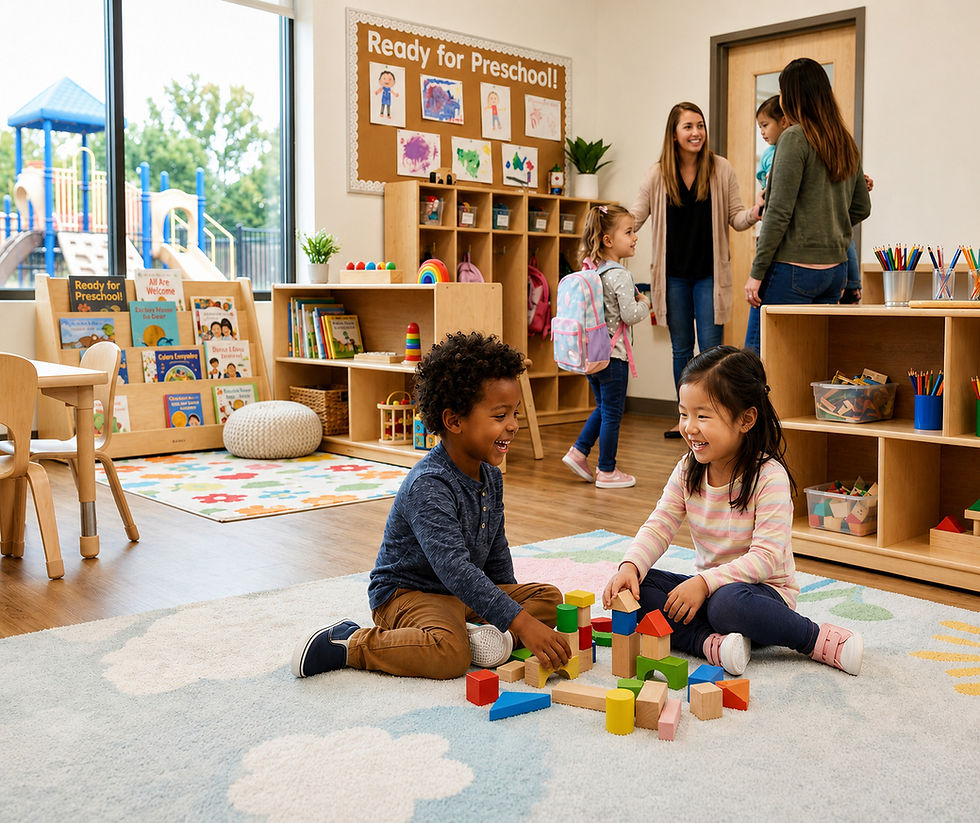
What Does "Preschool Ready" Actually Mean?
Preschool readiness isn't a single milestone. It's a combination of small, everyday behaviors that show a child can handle a classroom environment.
A preschool-ready child doesn't need to know their entire alphabet or sit still for long periods. Most preschools don't expect that. What they look for is a child who can manage brief separations from a parent, communicate basic needs, and show curiosity about people and activities outside the home.
Why It Matters
Starting preschool at the right time makes a real difference in how a child experiences it.
A child who starts before they're emotionally ready may struggle with separation anxiety for weeks, which can make both the child and parent dread drop-off. On the flip side, a child who starts later than they're ready might find themselves craving more stimulation than a home environment can provide, or they may miss out on crucial early socialization opportunities.
Getting the timing right helps preschool feel like an exciting new step instead of a stressful one, for both the child and the family.
7 Signs Your Child Is Ready for Preschool
A child doesn't need every sign on this list. A few consistent behaviors are usually enough to know they are ready to try.
Separates without major distress: Some tears at drop-off are completely normal, but your child calms down within a few minutes once you leave.
Shows interest in other children: Watching or attempting to play alongside other kids, even without full interaction yet.
Follow simple two-step instructions: For example, "Pick up the toy and put it in the box." They don't have to do it perfectly, but they should understand the request.
Communicates basic needs: Using words, signs, or gestures to express hunger, thirst, or discomfort.
Shows some independence: Attempts to feed themselves, take off shoes, or wash hands, even if they need help finishing up.
Can sit for short activities: Around 10 to 15 minutes for something engaging, like a storybook session or a simple craft.
Shows curiosity: Points at things, asks questions, or explores new environments with interest rather than fear.
How to Test If Your Child Is Ready for Preschool
If you're still unsure, here is a simple way to check in on their progress:
Observe at home: Over one week, notice how your child handles brief separations, like you leaving the room or a family member watching them for an hour.
Try a playdate or group setting: See how they respond to other children in a low-pressure environment, like a local playground or library story time.
Talk to your pediatrician: At routine checkups, ask about developmental milestones for your child's age group.
Visit a preschool classroom: Watching a real classroom in action, and seeing how your child reacts to the space, tells you more than any checklist.
Tips for Parents Preparing Their Child for Preschool
A few small steps at home can make the transition smoother:
Talk about preschool positively: Mention fun activities, new friends, and favorite parts of a school day.
Practice short separations: Leave your child with a grandparent or trusted caregiver for an hour or two before their first official day.
Establish a morning routine: A consistent wake-up, breakfast, and getting-ready routine reduces morning stress for everyone.
Read books about starting school: Stories about first days at preschool can ease anxiety and open up good conversations.
Visit the classroom together beforehand: Familiarity with the space, the teacher, and the daily flow makes the actual first day far less overwhelming.
How Bright Village Early Education Can Help
Bright Village Early Education understands that every child moves through these readiness stages at their own pace. The preschool classroom is built to support children right where they are, using a play-based curriculum that gently builds independence, social skills, and early academic readiness over time.
Rather than expecting children to arrive with a fixed set of skills, Bright Village Early Education focuses on helping each child grow into those skills through structured routines, qualified educators, and a safe, welcoming classroom environment.
Families who visit are encouraged to see the preschool classrooms firsthand and ask questions about how the daily schedule supports children still developing these readiness signs. This kind of firsthand look often answers the readiness question better than any checklist.
Conclusion
Preschool readiness comes down to a handful of everyday signs, not a strict age requirement or a long list of required academic skills. Watching how your child handles separation, communicates, and interacts with others will tell you most of what you need to know.
If you're looking for a nurturing daycare and preschool environment, Bright Village Early Education is here to support your child's early learning journey. Contact us or schedule a tour to learn more.
Frequently Asked Questions
What is the best age to start preschool?
Most children begin preschool between ages 3 and 4, though readiness depends more on individual development than age alone.
What if my child cries every time I leave?
Some separation anxiety is normal in the first few weeks. If it doesn't ease up after a month, talk with your child's teacher about strategies, or revisit whether a bit more time at home might help.
Does my child need to be potty trained before preschool?
Not necessarily. Many preschool programs work with families still in the potty training process, depending on the specific age group and classroom level. Ask directly about the specific program policy for your child's age.
How can I prepare my child for their first day?
Visit the classroom beforehand, talk positively about preschool, establish a consistent morning routine, and practice short separations in the weeks leading up to their start date.
What skills will my child develop in preschool?
Children typically build social skills, communication, early literacy, problem-solving, and independence through structured, play-based learning.
Comments